
Booking a vehicle recovery service is often done during a stressful moment. Whether your car has broken down unexpectedly or you’re arranging transport for a vehicle that can’t be driven, it’s natural to wonder what happens after you press the booking button.
Professional recovery companies follow a structured process designed to get your vehicle collected safely and delivered to its destination with as little inconvenience as possible. Understanding that journey helps remove uncertainty and allows you to prepare before the recovery vehicle arrives.
Your Booking Is Reviewed
Once your request is received, the recovery team reviews the information you’ve provided. This includes your location, vehicle registration, destination and any notes about the condition of the vehicle.
Small details can make a significant difference. For example, a vehicle with damaged steering or locked wheels requires different equipment from one that simply won’t start.
The more accurate the information you provide, the smoother the recovery process becomes.
The Right Recovery Vehicle Is Dispatched
Not every recovery vehicle is suitable for every job. Modern recovery companies maintain different types of transport vehicles to match different situations.
Depending on your booking, they may dispatch:
- A flatbed transporter for non-running vehicles.
- A recovery truck with winching equipment.
- A specialist vehicle for larger vans or commercial vehicles.
Matching the correct equipment to the job reduces loading time and helps protect your vehicle during transport.
You’ll Usually Receive Progress Updates
One of the biggest improvements in modern vehicle recovery is communication.
Rather than wondering when help will arrive, many providers now keep customers informed throughout the journey. Updates often include an estimated arrival time, driver details or even live tracking so you can monitor progress.
Being kept informed makes the waiting period far less stressful, particularly if you’re stranded away from home or travelling with family.
Preparing Your Vehicle Before Collection
While waiting for the driver, there are a few simple things you can do to help the recovery process.
If it’s safe to do so, consider:
- Removing valuable personal belongings.
- Keeping your phone nearby.
- Making sure the vehicle is accessible.
- Having your booking confirmation available.
These small preparations help the driver begin loading immediately upon arrival.
A Safety Inspection Takes Place
Before the vehicle is loaded, the recovery operator normally performs a brief inspection.
This isn’t just a routine check—it’s an important step that allows the operator to choose the safest loading method while noting the vehicle’s existing condition.
If there is visible damage, mechanical failure or tyre issues, the loading process may be adjusted accordingly to prevent further problems during transport.
Loading Is Carried Out Carefully
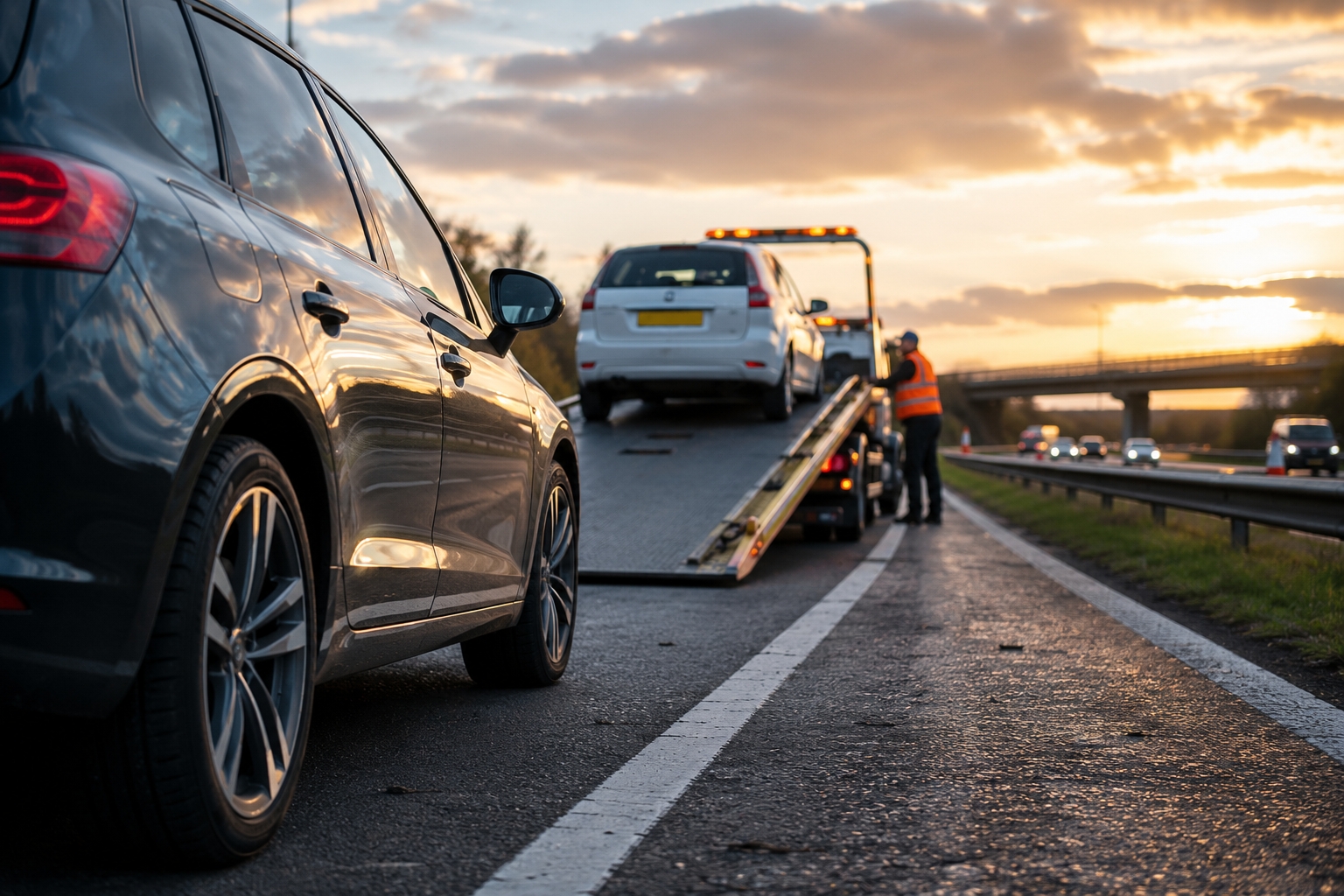
Professional recovery operators use specialised equipment designed to secure vehicles safely throughout the journey.
The loading process typically involves positioning the vehicle correctly, securing it with heavy-duty straps and checking that it cannot move during transport.
Although this stage usually takes only a short time, it’s one of the most important parts of the recovery process because proper loading helps prevent unnecessary damage.
Your Vehicle Is Delivered Safely
Once everything has been secured, the vehicle is transported to the destination you selected when making the booking.
This could be:
- Your home address.
- A trusted local garage.
- A dealership.
- An MOT or repair centre.
- A storage facility.
When the vehicle arrives, it is unloaded carefully and handed over before the recovery job is completed.
Why Choosing the Right Recovery Company Matters
The overall experience depends heavily on the company you choose.
A professional recovery provider doesn’t simply move your vehicle from one place to another. They communicate clearly, arrive with the correct equipment, handle your vehicle with care and keep you informed throughout the journey.
Those small details often make the difference between a stressful experience and one that feels organised, reassuring and professional.
Final Thoughts
Booking a recovery service is only the beginning of the process. From reviewing your booking and dispatching the right vehicle to careful loading and safe delivery, every stage is designed to protect both you and your vehicle.
Understanding what happens after your booking gives you realistic expectations and greater confidence should you ever need roadside recovery or vehicle transport in the future.